Define the control goal first
Is the objective perimeter security, pedestrian redirection, or vehicle lane separation? The answer drives panel type, site-stability factors needs, and spacing for gates wide enough to accept forklifts, telehandlers, or scissor lifts headed to work areas.
Wind exposure on open pads and valley floors
Afternoon gusts can load panels and signage, especially on long, straight runs without breaks. Note the exposure, any nearby structures that create wind tunnels, and whether lines will cross elevated grades. Actual conditions, the selected system’s limits, and site procedures govern acceptable configurations and site-stability planning.
Surface and site-stability planning options
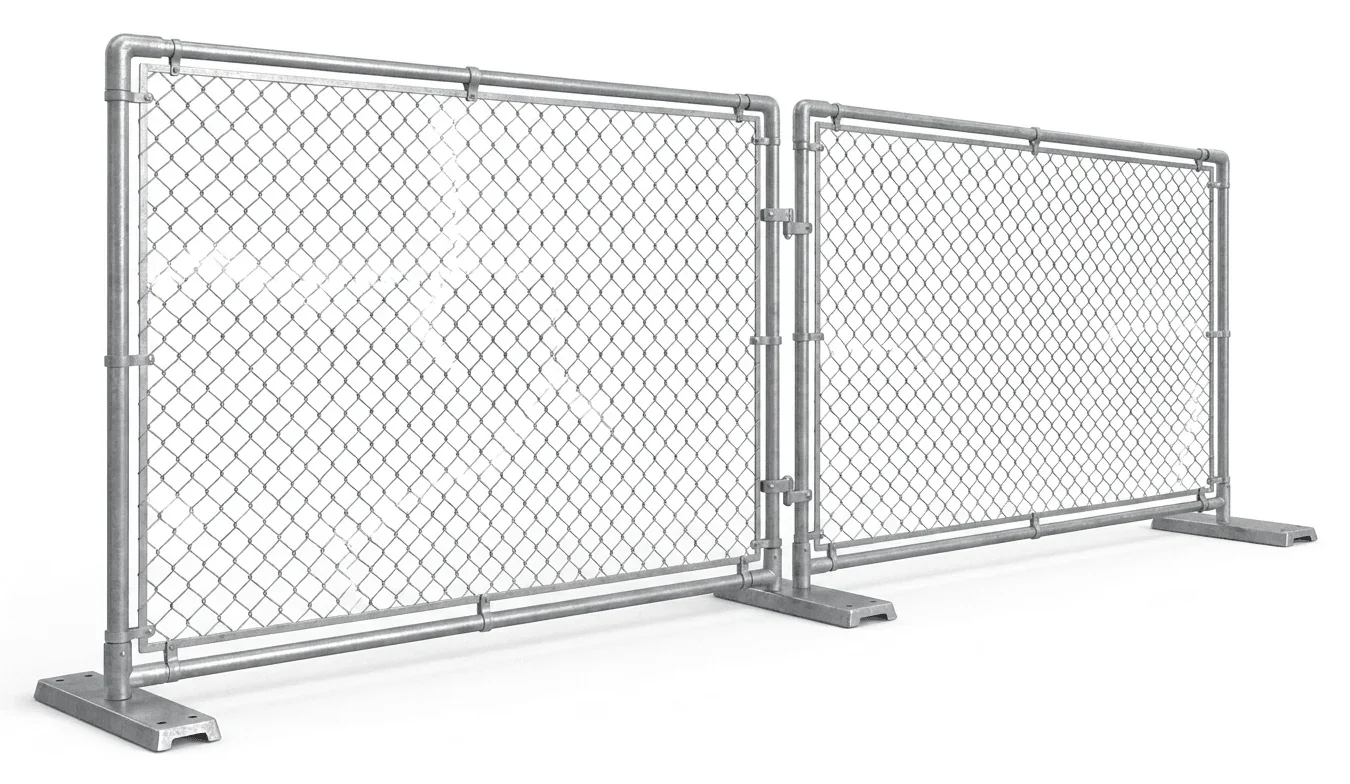
Clay and gravel surfaces behave differently across seasons. Record whether posts must sit on pavement, span rutted sections, or bridge soft spots after a thaw. The choice between freestanding barricades and semi-fixed fence bases often comes down to bearing capacity and whether the route will see heavy equipment turning across it.
Gate placement and equipment corridors
Projects that mix pedestrian paths with active lift routes need clear, signed gates sized for the widest machine on site. Map turning radii and overhead clearances so panels don’t conflict with booms, masts, or forks. For machine comparisons, see /aerial-lift-rental/, /boom-lift-rental/, and /forklift-rental/.
Sightlines and lighting
Where work extends into early morning or evening, coordinate fence lines with light placement to avoid casting shadows into loading zones. Pairing with /generators-light-towers-rental/ helps maintain visibility across long perimeters and staging yards.