What drives lift selection in Reno
Work around local distribution buildings and industrial sites often alternates between climate-controlled aisles and exposed yards. That means the first decision is whether the machine can stay on smooth slab under the task or needs ground clearance and traction outside. Ceiling height, racking depth, and aisle width narrow the indoor choice; slope, surface firmness, and typical afternoon wind narrow the outdoor choice.
Indoor jobs: slab electric focus
Large warehouses, fabrication bays, and event spaces in Reno tend to favor electric scissor lifts. Key constraints include: - Maximum platform height needed to reach lights, duct runs, or signage - Aisle width and turning radius between pallet positions or equipment - Floor load limits near mezzanines or elevated slabs
When the machine can sit directly beneath the work, a slab scissor offers straightforward vertical reach with minimal footprint. For tighter spots or maintenance around fixed equipment, a compact vertical mast may better negotiate pinch points. See /electric-scissor-lift-rental/ and /vertical-mast-lift-rental/.
Outdoor and hybrid work: rough terrain realities
Reno’s four-season pattern and gusty afternoons add variables outside. Rough-terrain scissors bring higher ground clearance, wider stance, and tires intended for uneven lots or compacted base. Typical planning checks include: - Expected wind exposure during afternoon hours - Surface uniformity across clay pockets and gravel pads - Approach angles near ramps or loading aprons
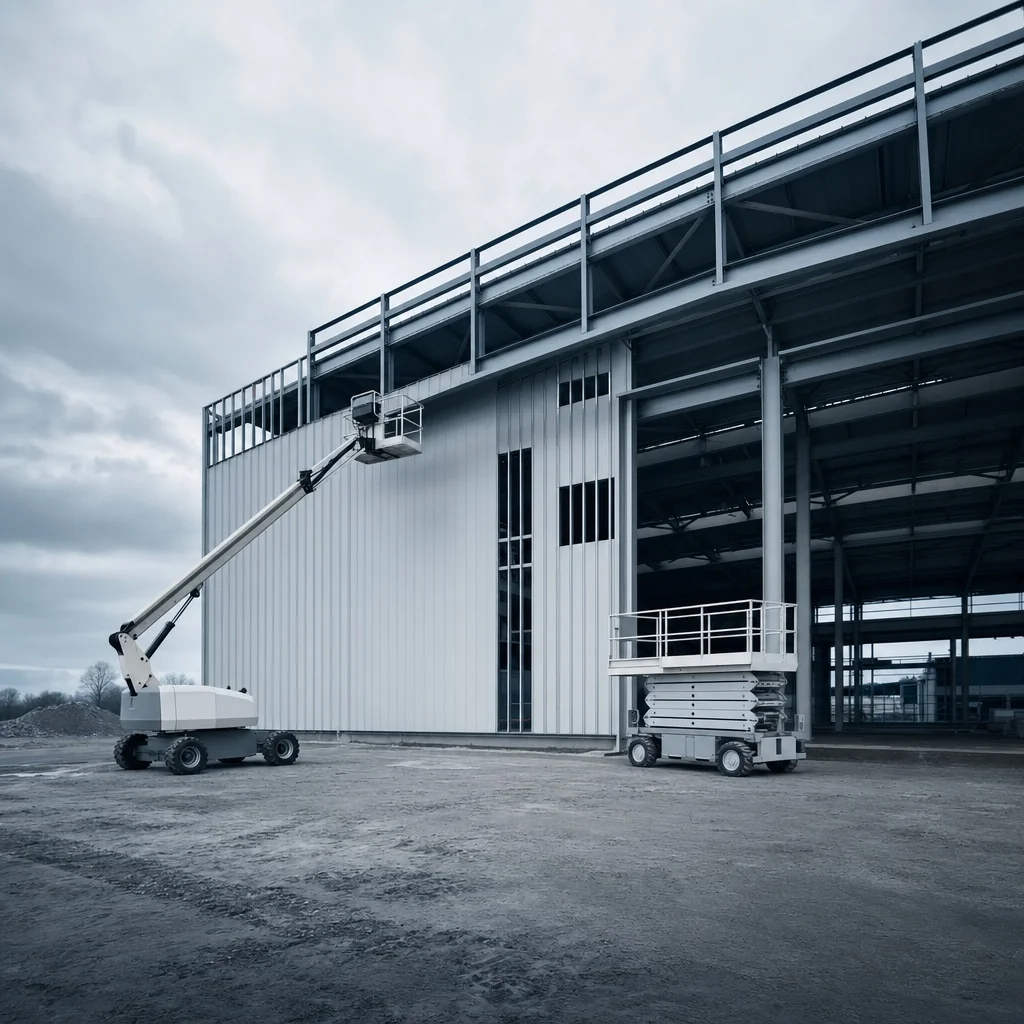
If the task extends over obstacles, a boom lift may be the appropriate comparison. Articulating booms navigate around pipes or canopies; telescopic models favor straight, longer outreach. Explore /rough-terrain-scissor-lift-rental/, /articulating-boom-lift-rental/, and /telescopic-boom-lift-rental/.
Project types behind local demand
Renovations in busy concourses, maintenance in stadium-scale venues, and work inside high-bay storage all show up around Reno. Each setting changes lift geometry: overhead fire lines, crowded mezzanines, or tall racking may nudge the choice between narrower platforms, higher capacities, or greater vertical reach.
How this site helps
Each page frames the job by reach, footprint, and terrain, then ties those measurements to local wind and surface conditions. Linked categories provide deeper comparisons and related equipment, including /forklift-rental/ for material handling and /telehandler-rental/ when loads must be staged at height.