Long, clear shots across open ground
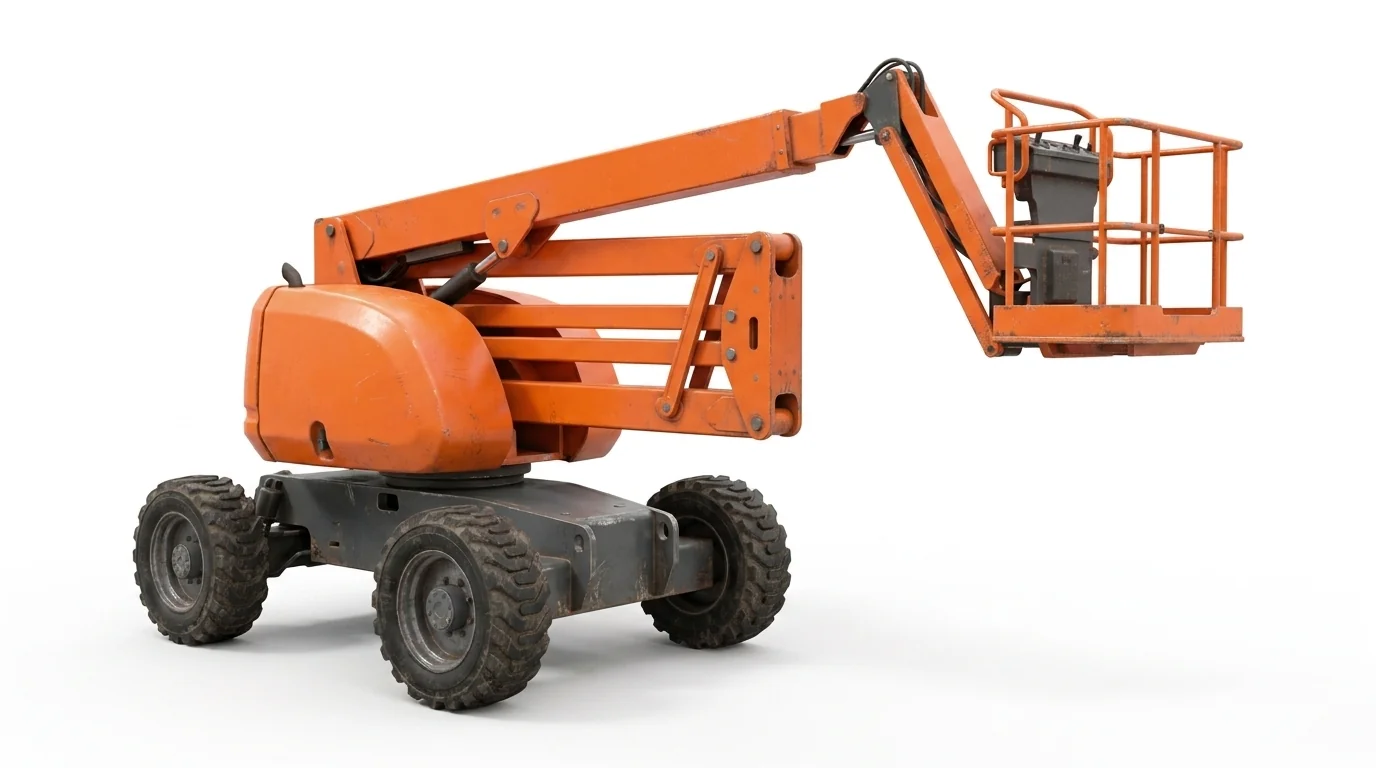
Telescopic sections extend directly to the work, reducing articulation complexity and often speeding up cycles between picks. This suits exterior cladding, steel touch-up, lighting, and signage where obstacles are minimal. On industrial sites, a straight boom can stage outside a controlled zone and still reach the task, reducing machine traffic near active work fronts.
Local conditions that alter selection
- Wind: Afternoon gusts are common. The selected unit’s instructions and site rules determine if elevated work proceeds. Exposed valley floors and ridge edges feel it more.
- Surface: From compacted pads to clay subgrades, ground support varies. Tire type and machine weight affect bearing pressure and approach paths.
- Grade: Foothill slopes and utility swales may require models with defined gradeability and four-wheel steer; verify underfoot conditions at the exact parking spot.
Power, tire, and jib considerations
- Diesel rough-terrain builds dominate exterior work with longer reaches.
- Electric or hybrid straight booms can support interior atriums or semi-enclosed concourses when emissions limits apply; check door and slab access.
- Jib versions add fine positioning under overhangs, but if the path bends around obstacles, an /articulating-boom-lift-rental/ may be more efficient.
Sizing by measurements
- Required platform height and horizontal outreach to the target.
- Setback distance available from curbs, landscaping, or security lines.
- Platform capacity for crew plus materials like fixtures or panel sections.
- Transport path: gate widths, turning radii, and dock thresholds found at local distribution buildings.
Related categories
- Need to reach over conveyors or canopies: /articulating-boom-lift-rental/
- Vertical-only indoor work: /electric-scissor-lift-rental/
- Broader options: /boom-lift-rental/