Start with the load and the run time
Generators are sized by the combined start-up and running amperage of your tools, lighting, and temporary HVAC. List the highest inrush circuits first, then note how long the load must stay online. Local distribution buildings often require steady power across long shifts; outdoor work near the foothills may need shorter, weather-dependent windows. Longer run times narrow you toward larger tanks or units with simplified refueling access.
Access route and ground surface
Getting a unit to the pad is often the hardest part in Reno. Clay valley floors can rut after a thaw, while compacted gravel at industrial sites can be washboarded by truck traffic. Note: - Tow vehicle limitations and turning radius between gates and laydown areas - Grade changes on service roads leading to set points - Whether the machine must sit below the task or can be staged on level ground nearby These details affect trailer style, tire type, and whether a skid-mounted generator makes more sense than a towable.
Wind exposure and light tower mast selection
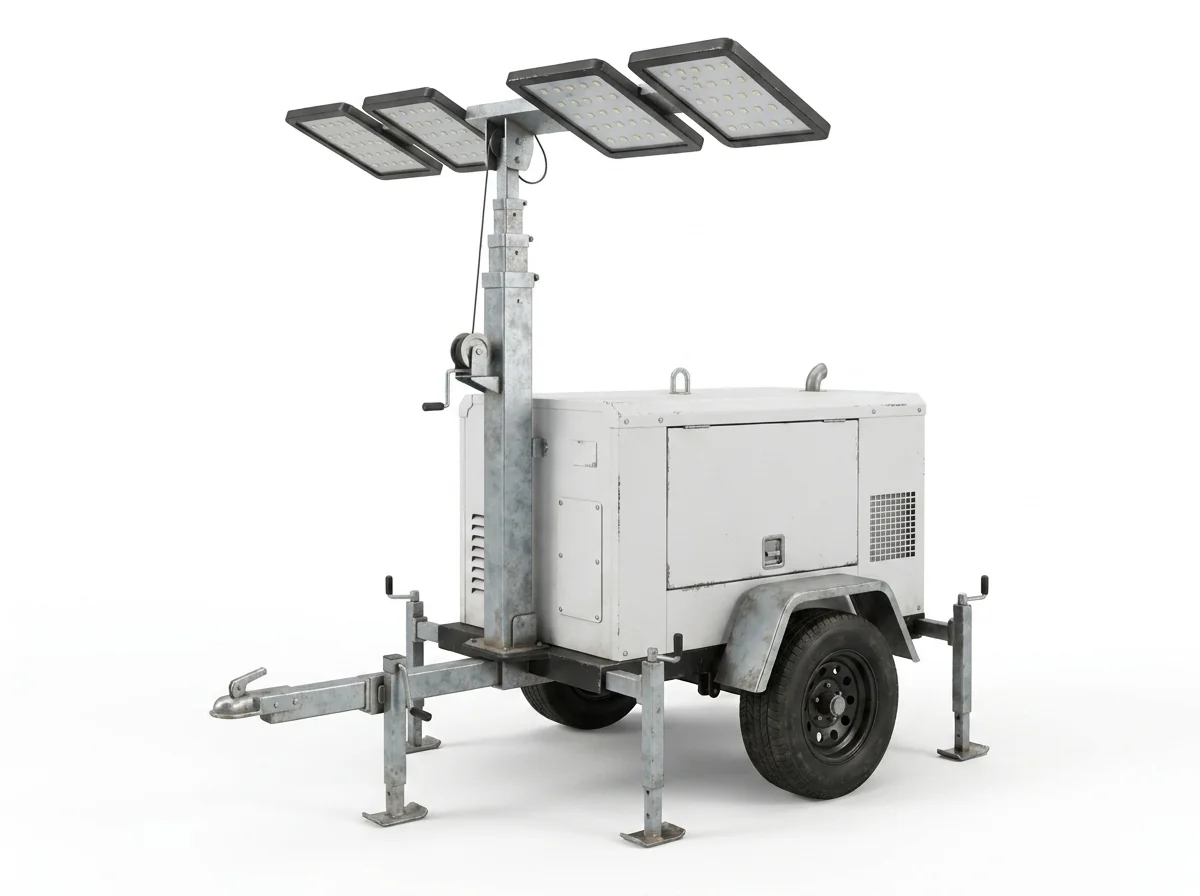
The local afternoon wind pattern can produce gusts that stress unanchored equipment. For light towers, record the prevailing exposure of the pad, any wind breaks from buildings, and whether the unit will be staged on a ridge or in a leeward courtyard. Mast design, stabilizer footprint, and allowable operating limits vary; actual conditions, the selected unit’s instructions, and site procedures govern.
Noise and emissions considerations
Electric slab work inside climate-controlled facilities usually favors portable power kept outside with cabling routed through dock doors, while remote edges of industrial sites may accept higher sound levels. If the tower lighting is for an active public interface, choose heads and beam patterns that minimize glare across access roads or neighboring properties.
Cable routing and task position
Measure the distance from the generator to panels or distro boxes and sketch crossings. Long runs across active yards call for elevated routing or protected crossings. For lighting, note whether the tower must throw light over racking, aircraft-scale interiors, or open lots. The task geometry—height to target, angle, and shadowing from structures—determines head count and placement.
Related comparisons
- For elevated maintenance near lit work areas, see /electric-scissor-lift-rental/ or /rough-terrain-scissor-lift-rental/
- For exterior fixture access and reach beyond scissor height, compare /boom-lift-rental/ and /articulating-boom-lift-rental/