Plan scissor lift work in Reno around two constants: tall indoor bays in logistics buildings and gusty afternoons along the Sierra front. The job geometry, ground conditions, and wind exposure narrow your choices quickly.
Reno’s mix of high-bay interiors and open, uneven outdoor sites means the first question is location: inside a climate-controlled floor grid or outside on grade that shifts from hardpan to rocky fill. From there, platform height, machine footprint, and power type define the workable range.
Start with where the lift sits relative to the task
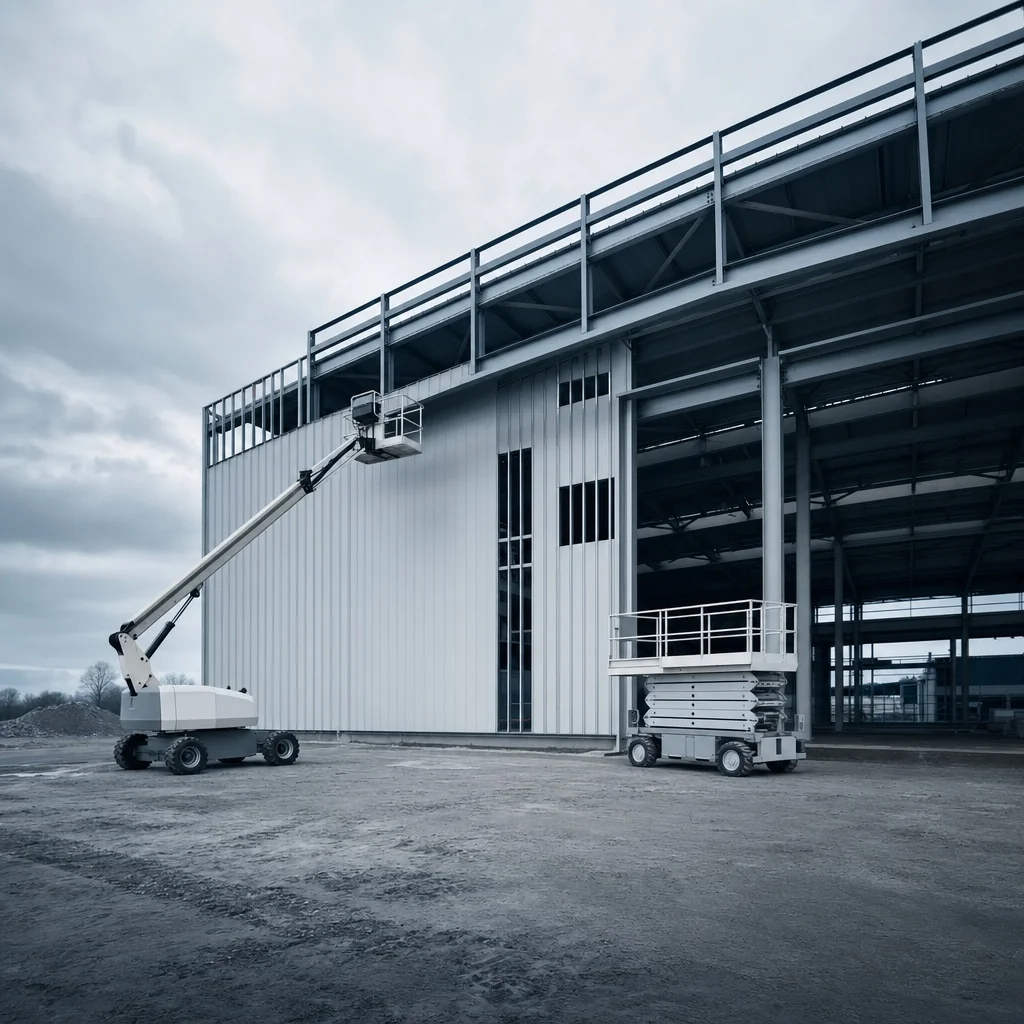
Can the machine sit directly under the work, or is there an offset? Scissor lifts go straight up, so the platform must align with the task. If you need reach over obstacles, compare options at /boom-lift-rental/ and /aerial-lift-rental/.
Measure true working height inside local distribution buildings before you size the unit. Overhead fire lines, mezzanines, and conveyors can reduce usable height even when the ceiling looks clear.
How Reno’s environment changes the selection
Afternoon winds along the valley can be unpredictable. For exterior work, published limits for each model and site procedures govern whether operation is allowed.
Four-season swings favor electric slab scissor lifts in climate-controlled interiors and rough-terrain models when snow, mud, or compacted base rock are present.
Valley-floor clay can pump under traffic after moisture, while hillside pads may crust over a softer layer. Tire type and ground bearing assumptions affect what’s practical.
Narrow by platform height, footprint, and power
Electric slab scissor lifts: compact footprints for narrow aisles, smooth floors, and low emissions. See /electric-scissor-lift-rental/ for typical indoor sizes and constraints.
Rough-terrain scissor lifts: wider stance, higher ground clearance, and outdoor duty on unfinished sites. See /rough-terrain-scissor-lift-rental/ for choices that handle grade and variable surfaces.
If tasks mix interior signs with exterior façades on the same day, plan staging so machines match the surface underfoot rather than forcing one unit to cover both.
Common Reno use cases
Facility maintenance in tall racking areas where quiet operation and non-marking tires matter.
Exterior envelope work on commercial additions where wind exposure and uneven subgrade drive the need for rough-terrain units.
Institutional retrofits with alternating indoor and courtyard tasks that may require separate lift types.
When a scissor isn’t the right geometry
Obstructions between the unit and the work surface call for horizontal reach. Compare articulating and telescopic booms at /boom-lift-rental/.
Very tight utility corridors or single-person access may favor /vertical-mast-lift-rental/.
Related equipment comparisons
For material placement at height on outdoor builds, see /telehandler-rental/.
For full-category overviews, visit /aerial-lift-rental/.
Equipment questions
Questions about Reno planning
How do afternoon winds in Reno affect outdoor scissor lift planning?
Gusty valley winds can exceed what some platforms are rated for. The specific unit’s instructions and site rules set whether work proceeds. Plan exterior tasks earlier in the day or when exposures are shielded by structures where site policies allow.
Are electric scissor lifts suitable for tall warehouse aisles in Reno?
Yes, when floors are smooth and charging access is available. Measure clear heights around sprinklers and conveyors, and match platform size to aisle width so turning does not conflict with racking.
When is a rough-terrain scissor lift a better fit than an electric model?
Choose rough-terrain units when the surface is uneven, unpaved, sloped, or seasonally slick. Wider stance and outdoor-duty features help manage variable ground common on local industrial sites.