Step 1: Define the job geometry
- Can the machine sit directly under the work or must it reach over obstacles?
- What is the platform or hook height, and how much horizontal reach is required?
- Will the task occur inside climate-controlled space or in exposed yards where afternoon gusts are common?
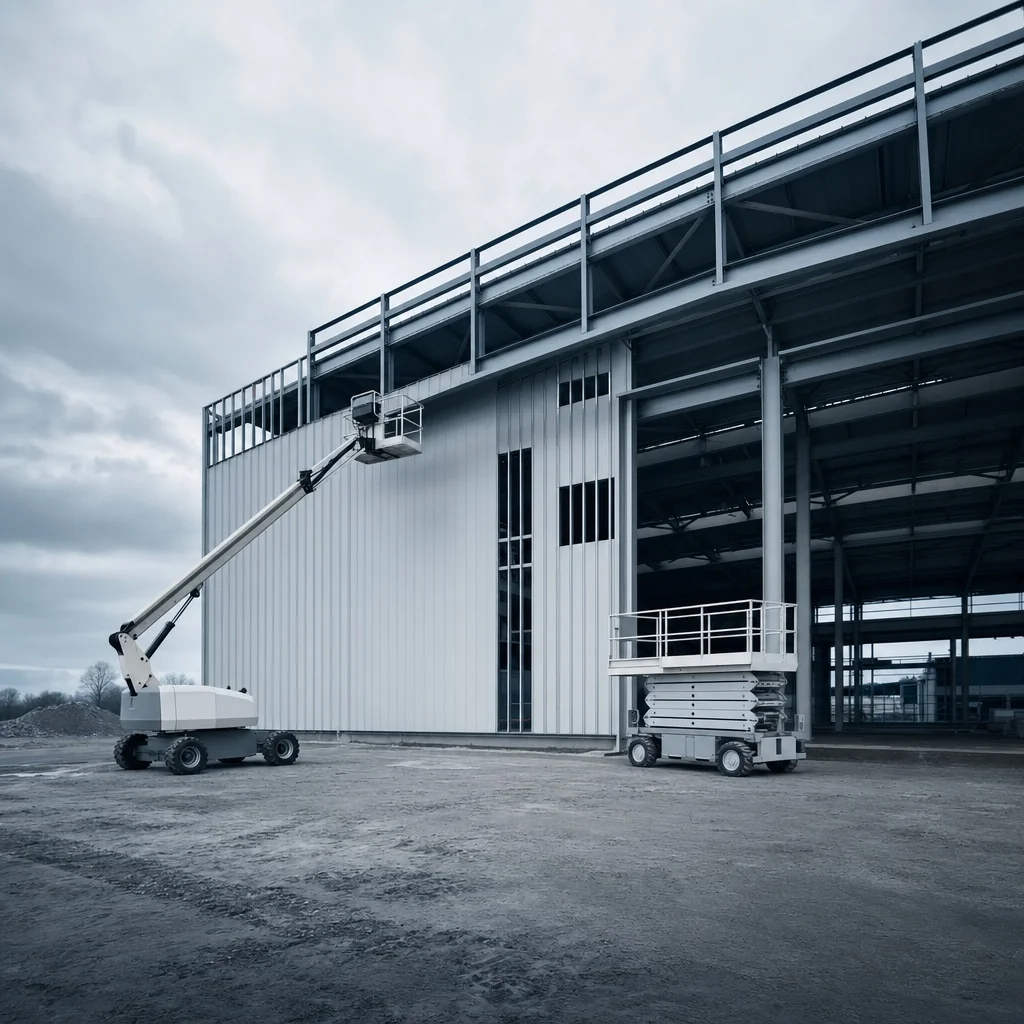
Answers here separate slab scissor work from boom-reach needs. Compare /electric-scissor-lift-rental/ for flat interior slabs and /boom-lift-rental/ for outreach over conveyors, racking, or exterior obstructions.
Step 2: Match the surface and route
Local projects cross clay, compacted gravel, and sloped foothill approaches. Note grades, ruts, and thresholds at dock doors. If the route is smooth concrete, see /electric-scissor-lift-rental/ and /vertical-mast-lift-rental/. For uneven ground and seasonal snow or mud, review /rough-terrain-scissor-lift-rental/, /articulating-boom-lift-rental/, and /telehandler-rental/.
Step 3: Consider wind and weather windows
Outdoor elevation work in the region must account for gust patterns and changing conditions. Platform size, outreach, and stabilizer requirements vary by model; actual conditions, the selected unit’s instructions, and site procedures govern whether work proceeds on a given day.
Step 4: Load and material handling
List the heaviest tools, fixtures, or materials that ride with the crew. If palletized loads need to move across mixed surfaces, /forklift-rental/ handles slab work while /telehandler-rental/ addresses rough approaches and elevated placements.
Site products that support lift work
- /generators-light-towers-rental/: power and visibility for extended shifts across large pads and interiors
- /storage-containers-rental/: secure, level staging near active equipment corridors
- /temporary-fencing-barricades-rental/: controlled paths for pedestrians and machines in windy, high-traffic environments
Reno-specific planning cues
- Large indoor facilities demand compact turning and low-emission units for long runs under roof
- Exposed edges of industrial sites and hillside projects bring variable footing and afternoon gusts into every elevation plan
- Access gates, laydown space, and turning radii around racking or campus structures often limit the practical machine class as much as height